Tuesday, 16 August 2016

Cuban Army for the Ten Years War in Cuba

The mainstay of my Cuban army are also figures from the Perry Miniatures American Civil War range, particularly the Confederate infantry. The main problem I had was depicting a very rough and ready force as it appeared at the start of the war, and then a more professional looking body as the war
progressed. Also there were going to be difficulties showing soldiers on one hand and liberated slaves on the other. Clearly my Cuban forces would require more than the simple paint job that provided my Spanish forces.


Three of my Mambi soldiers with the Cuban flag as it appeared at the start of the rebellion; they are Perry Miniatures American Civil War Confederates with some simple conversion work.  I sliced off or filed the top of head to get a nice flat surface to which I could glue a disc of paper or plastic card. Then, on the centre of the disc I stuck a new crown in place; this was made from scrap plastic, filler or even by using a trimmed down cap from the box of  Perry stuff. Some of the figures have machetes made from a strip of plastic card. Finally they were undercoated, the hats suitably crushed and then painted up.


I think that it is always difficult to represent irregular forces but I am quite pleased with the result I have achieved here. Some of them are armed only with machetes or swords, a couple have pistols, one has a rifle, one has a rifle chopped down to represent a shotgun and the standard bearer has a double barrelled shotgun slung across his back.


Two more Mambi soldiers. The one on the left is a conversion from a Perry  figure  as described, the one on the right is a presentation figure given when you buy the ACW rules supplement from Warlord Games.


Another Mambi soldier in close up. The insignia on the hat is the Cuban flag that was eventually adopted and is still used today.  I found a suitable image on the internet, copied it into a graphics programme, reduced it, repeated it many times and then printed out a whole sheet of them.


I had quite a search to find figures that  I could use for  liberated slaves; I eventually settled on these Copplestone Castings available from North Star. They are Zanzibaris and I was attracted to them since they have bare feet and clear negro features.

My interest in this particular war was first sparked when I saw the painting of a Cuban machete charge that I used at head of my post labelled the Ten Years War. Which of course meant that I had to have Cuban cavalry. Perry Miniatures came to the rescue again with their American Civil War cavalry although they needed a little conversion work. First I removed the scabbard and sword hilt, replacing them with a machete case made from plastic card. Heads were treated the same way as the infantry and provided with a suitable hat.


In the picture on the left you can see the conversion work on an unpainted figure; on the right is the same figure after a coat of primer.


And here the finished regiment, exactly as I envisaged them and ready to charge like those in the painting!


A close up view of one of my Mambi cavalry ready to join in a machete charge against their Spanish adversaries.


Although the Cuban Army was basically an insurgent army they did have some artillery; either smuggled in from the USA, supplied by various juntas and sympathises, or captured from defeated Spanish units. Particularly favoured were mountain guns and I decided to make one to beef up my fledgling force.


It is made from Perry ACW artillery parts; the trail was built direct from the box, then a section was taken out of the middle and the two pieces glued together thus reducing the overall length of the trail. The barrel was taken straight from the box but was thickened for the last third of its length by winding tape round. The wheels came from my box of 20mm bits as the ones from the Perry set were far too big for this type of gun. The final piece was based and painted before being provided with a crew. You can see above that the commander is delighted at scoring a hit and has thrown his hat into the air!


As mountain guns were generally transported by mules I made a second gun and deconstructed it into several loads to add to the packs on a number of mules.


The mules came from a range of toy animals for zoos and farms; harnesses were made from plastic card and tape. I have a second set of four mules and may eventually get round to modelling them without the gun for times when the gun is in action, but for the moment I am more than pleased with the result.


Wednesday, 10 August 2016

Making Coastline and Beaches

One scenario that I was keen to play in my Ten Years War in Cuba project was that of gun running or a filibustering expedition as it was called at the time. To do this I needed a ship and a coastline or beach. The ship is currently being built and I will post details later when the model is finished. My method od making the coastline however is so quick and easy that I thought I would share it with you right away!

First of all I needed to represent the sea and did this very simply by visiting a fabric shop and buying a couple of meters of suitable pvc or vinyl. I chose a deep blue and lightly textured material and was pleased that it only cost me £6-00:


I know, it's a boring photograph but things begin to get interesting when you lay your gaming mat on top of the sea:


At this stage it doesn't look very realistic with a perfectly straight join between land and sea, however, when I bought the vinyl I also bought an offcut of sand coloured fabric for just £2-00. I laid this out and cut an irregular shaped strip which I then placed over the join between land and sea. Hey Presto! A coastline:


Adding palm trees and rocky outcrops using chunks of cork bark soon brought it to life:


As well as using cork bark I also use Mopani wood which is another good method of representing rocks:


If you have not heard of Mopani wood before you can obtain it from pet shops and from suppliers of accessories for fish tanks and reptile tanks. Here is a close up to give you a better idea of the texture:


I added some of my stands of jungle to break up the rather harsh lines and add interest:
 
 
And that's it! I hope you like the idea which really is a quick, simple and cheap method of introducing coastline into your wargames. The idea can easily be adapted to make a wide river, lake, estuary or even a desert island and, although I made this for my Ten Years War in Cuba game, it can easily be used for any other period and any other theatre of war. As soon as my Cuban and Spanish armies are complete and when the gun runner's ship is built I'll feature the scenario on here so that you can see the whole thing.


Tuesday, 9 August 2016

Buildings and Crops for my Ten Years War in Cuba Project

Once my jungle was complete it was time to add a few buildings and fields to represent the plantations and agricultural settlements around which much of the war was to revolve. First of all I made a couple of shacks which would have housed slaves and agricultural labourers:


Here is a close up of one of the shacks, you can see them both in views of the completed jungle. Made from foam board to a very simple design with card and coffee stirrers. The roof was made from card and covered with pva glue and raffia.

I also built a small jungle hut; it can either be used as part of the main settlement or set off deep in the jungle as a base for some of the Cuban insurgents:


Again I used a very simple construction method, in this case everything was based on an empty Pringles tube! I cut the tube down to size, covered it with pva glue and lengths of skewers held in place with elastic bands until the glue dried. A simple card roof was added and to this I glued palm leaf shaped pieces of painted card; detailing was finished with a black felt tipped pen.

The agricultural economy was crucial to Spain and in efforts to protect this source of wealth the armed forces constructed many blockhouses - later on in the was a whole line of them was constructed (the Trocha) cutting the island into two and isolating the rebels at the Eastern end.


I used foam board again with coffee stirrers for the door and lining the loopholes. The roof was made with corrugated card glued into place, painted and detailed with a felt tipped pen as before.


That completed my initial settlement though I plan to add more as the project progresses; ideally I would like another couple of huts, a church and perhaps a more substantial plantation owners house. It would also be interesting to build a mill and boiling house since these were vital buildings on any plantation, but that's in the future.  When I eventually get round to building them I will feature them here but for the moment the next thing I needed was fields or crops.

Sugar cane was crucial to the Cuban economy and was a source of great wealth for the Spanish Government, so a field of the stuff was next on my list:


I made it by drilling rather a lot of holes in a piece of wood ! Into these I glued pieces of skewer which I had painted and partially split at one end; then, very painstakingly I glued leaves into the split ends. Not strictly botanically accurate but good enough for my purposes and good enough to restrict the passage of troops just like the real thing.


Various bits and pieces of greenery that I had left from making the jungle were glued to another base to make a small field of mixed crops. This was an essential part of any plantation since the crops were used to feed the slaves and other workers:


A final addition, and essential for the diets of the agricultural population, were plantains or bananas to you and I. Another base board was drilled and then filled with suitable looking bits and pieces from my jungle raw materials. Once the glue was dry I had the fiddly job of painting the appropriate parts bright yellow to represent my bananas:


Again they may not be entirely correct from a botanist's point of view.....but hey! Making model bananas is not something that I do every day.


Friday, 5 August 2016

Making Jungle Terrain for my Ten Years War in Cuba Project

First of all, how to make the jungle? As I had already decided that the best scale for the model figures would be 28mm and I would therefore set about building jungle terrain to suit. Although I had made quite a lot of terrain in the past (for my son who was interested in Warhammer) I had never made a jungle or anything remotely like it. Luckily I found lots of useful stuff on the internet but I have to give special thanks to Major Thomas Foolery for the invaluable advice contained on his blog: http://majorthomasfoolery.blogspot.co.uk and I pinched a lot of his ideas.

I wanted the terrain to be very flexible and decided to build it on small stands which could be rearranged as needed. A visit to Hobbycraft furnished me with small plywood discs which were ideal:


These particular ones came in packs of six and cost £1-80. I also bought a couple of others types, some at six and a half inches in diameter, some three and a half inches square, and a few rectangular ones measuring three by two inches. They were all sprayed with matt black, coated with pva glue and green scatter or flock, and then left to dry.

When the stands were ready for further work I assembled all of my raw materials:


Different grades and colours of scatter material and sheets of self-adhesive grass tufts also in different colours, all easily available from the local model shop. (Probably the best model shop in Greater Manchester for military related items, and the one I use regularly is F and S Scale Models in Audenshaw.)


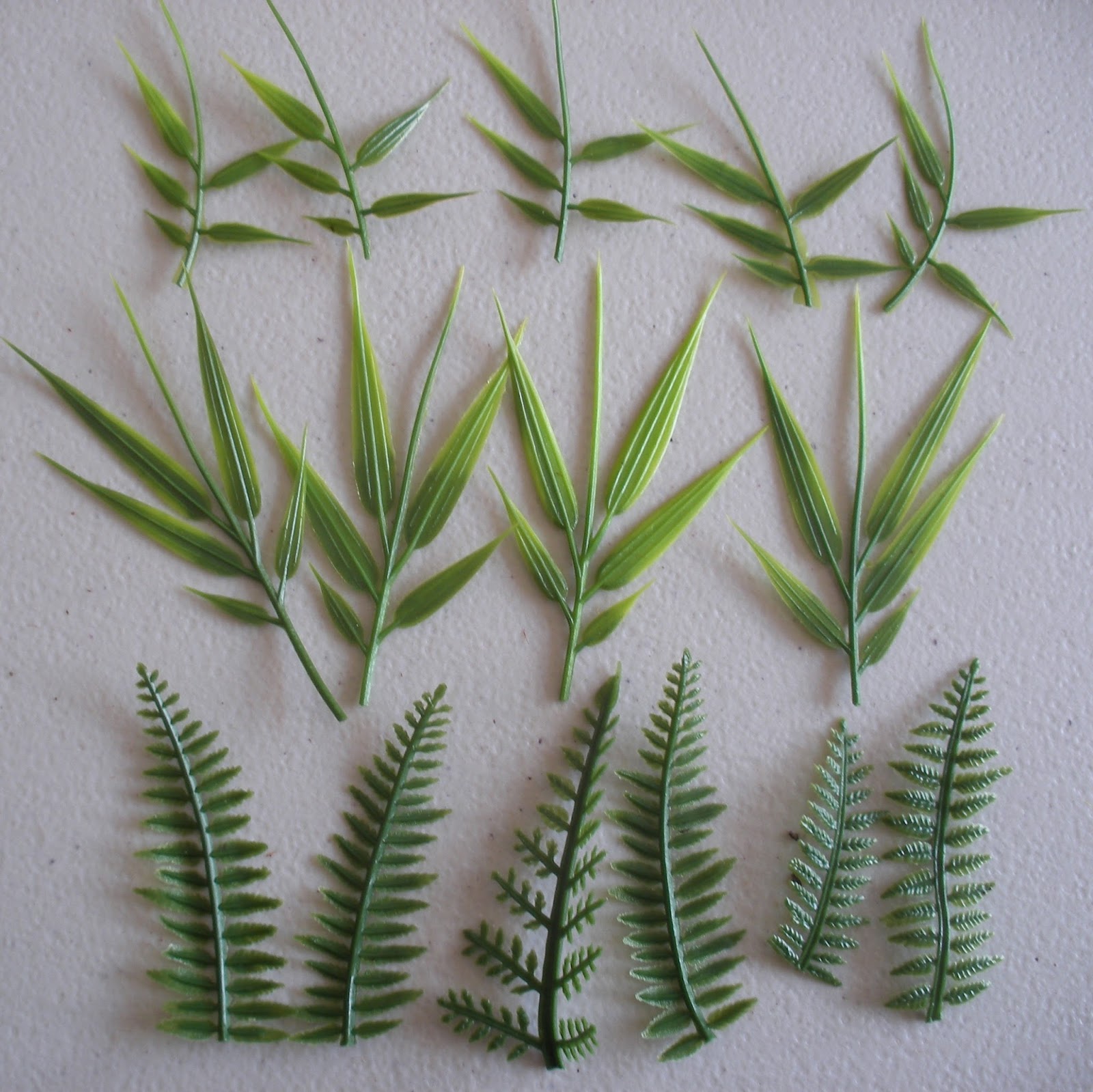
I obtained a variety of plastic leaves and foliage from a large local garden centre; much of the greenery came from the floristry section and other odd items were found in the pet, reptile and aquarium areas. (If you live in the North West then you cannot do better than visit Gordon Rigg Garden Centre which is where I obtained most of these materials from.)


Reindeer moss or lichen I am sure you are familiar with, but instead of buying it form the model shop I bought a huge bag of the stuff from a floristry shop for just £2-00!


Cork came from the reptile section of our extremely useful garden centre. As well as the large chunks shown here they also had sections of bark in branch form; I bought one branch for £3-50 and used it to make the four large stands of tree trunks that you will see a little later.
 

I collected together a few suitable rocks and stones form the garden along with appropriately gnarled twigs. On the top right of this photograph is a handful of pot pourri which contained a number of interesting leaves and pods, on the bottom left is the same stuff which has been crunched up.

That's it! Everything that I would need was spread out on the table ready to be assembled. I plugged in and switched on the hot glue gun then set to work.
 
First of all I worked on the small wooden discs which had already been coated with green scatter material. I simply dabbed blobs of hot glue onto the surface and quickly stuck leaves, moss, twigs etc. in place in an entirely random fashion. I will not bore you with pictures of all of the stands (I made about thirty!) but here is a photograph of two of them just to give you the general idea:
 

The larger bases were used to make huge tree trunks such as you might find in a rainforest; I have only modelled the lower part of these tress as I wanted to be able to get in amongst the foliage to place model figures for my wargame. The pieces of cork branch were glued in place first and were then festooned with string that had been soaked in pva to represent creepers. If the sawn edges of the cork could be seen I toned them down with a little paint before adding random foliage, leaves etc. to the rest of the base:


Palm trees were added to some of the bases and when I ran out of the shop-bought wooden ones I made a few more by laminating pieces of cardboard together with pva. I then treated them exactly the same as the wooden ones and added my trees:


 Bamboo I used was of two types, some of it was shop bought and simply added to the prepared square bases:


But I also made some stands of bamboo myself. When I was on holiday in Madeira I visited the botanical gardens and was surprised to see that some species of bamboo would grow to thirty or forty feet in height and would also be so dense as to be impenetrable. To make something similar I drilled lots of holes in some of my square bases; into them I glued skewers that had been painted green and then covered with rings drawn in felt tipped pen. On the top of each skewer I then used superglue to attach suitable foliage:


These stands of bamboo were the final element of my basic jungle which you can see in some detail in the page headed Completed Jungle Terrain for my Ten Years War in Cuba Project.

I still wanted to add more terrain in the form of swamp, rivers, fields of crops, roads or paths and buildings and I will cover each of these in further posts.


Tuesday, 2 August 2016

The Ten Years War in Cuba


       Machete! The Ten Years War in Cuba 1868-1878


My major new wargames project is to build armies and terrain for the Ten Years War in Cuba. The war raged between 1868 and 1878 and is much less well-known than the later Spanish American War which finally resulted in Cuba's independence from Spain.

Cuba had been the jewel of the Spanish Empire in Latin America; she was one of Spain's wealthiest colonies and the capital city of Havana was the principal port in the Caribbean. But by 1830 Spain had lost of all her possessions on the American mainland, both North and South retaining just two islands in the Caribbean, those of Puerto Rico and Cuba. Cuba in particular was much valued for her contributions to the coffers of the Spanish monarchy and was usually referred to as the Ever Faithful Isle. This was not a particularly accurate name since, under Spanish rule, there had been revolts and unrest for most of the country's history.

Unrest culminated in the Ten Years War which was followed by an interlude of seventeen years before the cause of independence reared its head again leading to American intervention and the eventual ousting of Cuba's colonial masters. Many commentators and historians see Cuba's history in the late nineteenth century as a continuum, a thirty years struggle for independence; others see a quite distinct series of events. Thus we have the Ten Years War from 1868 to 1878, the Little War of 1879, and the Spanish American War of 1895 to 1898. Whilst the Spanish American War is quite well known the earlier struggles tend to languor in obscurity; tourists walk past statues of unknown figures and along streets named after obscure heroes. Even in Cuba's museums and galleries events of the earliest struggle for independence are overshadowed  by exhibits of Castro's Revolution and the exploits of Che Guevara.

The Ten Years War was a savage and extended conflict causing immense disruption to the country and severe damage to fifty percent of the island. Homes, public buildings, farms and plantations were all devastated and repeatedly raided by both insurgent soldiers and the Spanish forces which comprised the regular army and the Volunteers - an irregular force of Cubans who acted as savage guardians of the towns and cities. The death toll has been put at 50,000 Cubans and close to 100,000 Spaniards many of whom died not in combat but as a result of the ravages of tropical diseases and hunger.

The Ten Years War is of interest to the military historian for a number of reasons. Firstly, it is the first real example of a guerrilla war where circumstances dictated a conscious decision to engage in this type of warfare. The conditions dictating this course of action were the almost overwhelming superiority of the Spanish forces, the brutality with which Spain attempted to crush the rebels, and the immense difficulties faced by the rebels when they tried to obtain weapons and munitions. Secondly, the insurgents attempted to destroy the Cuban economy, thus making Spain's attempts to finance the war untenable. This is therefore an early example of economic warfare or of total war. Thirdly, politics and international relations played a crucial part in the events as did the call for social reform with the eventual aim of abolishing slavery and establishing democratic rule.
Since retiring recently I have undertaken quite a lot of research on this little known war and I hope to have my work published in another book...waiting to hear from my publisher! (If they are not interested then I'll go ahead anyway and self publish on the Kindle as I am sure the subject will be of interest to lots of people out there.)

Further posts will feature making the terrain, roads, buildings and coastline; making figures for the Spanish and Cuban armies; building transport and ships for gun running; developing rules for skirmish actions in the black powder era; and finally, playing the game!

Monday, 1 August 2016

Quick-build roads for my Ten Years War in Cuban Project

Once the main body of my jungle had been built and a few buildings had been added it became apparent that I needed some jungle roads or tracks. I thought that I would share my simple method of making roads quickly, easily and cheaply!

 
First of all buy a cheap pack of self-adhesive vinyl floor tiles. The ones I obtained were 12 inches square and I cut them into strips each 6 inches wide. I wanted a road of 2 inches width so, on the backing paper of the tile I marked the edges at 2 and 4 inches, then I drew the rough outline of my road between these markers as you can see in the photograph above.


Next I used a sharp craft knife to cut away the backing paper following the rough outline that I had drawn. This exposed the sticky side of the tile as you can see here.


I then poured sand coloured flock onto the sticky surface and pressed it down. This represented the surface of my road and as soon as it was in place I removed the remaining backing paper exposing the rest of the sticky surface; onto this I poured green flock and lightly pressed that into place. That's it, a road made in minutes!

Of course you can then embellish it to suit your terrain, period, location etc. Since I was making roads for the Ten Years War in Cuba I added suitable elements of jungle greenery:


Here are a couple of finished road sections patrolled by a Spanish infantry column. I have added reindeer moss, tree stumps and other bits and pieces to enhance the effect. By the way the tree stumps are made from cinnamon sticks, a packet of ten from the floristry section of our local garden centre coast me just 99 pence!


A small group of Cuban cavalry galloping along a couple of curved road sections. If you are making curves like this think carefully about marking out the tile so that the roads interconnect properly.

Of course this simple method of making roads and pathways can be used for any period and scenario of wargame. Cut straight lines and use a tarmac coloured flock for modern roads; finish them off by sticking card to the sides, draw lines on them and you have pavements. Likewise you could stick pre-printed paper in the centre to represent cobblestones or some other surface and again finish the sections off with cardboard pavements to the sides. The different adaptations are endless and should furnish you with whatever roads you need!